How to eat HEALTHY for $0.78

Share this
Share

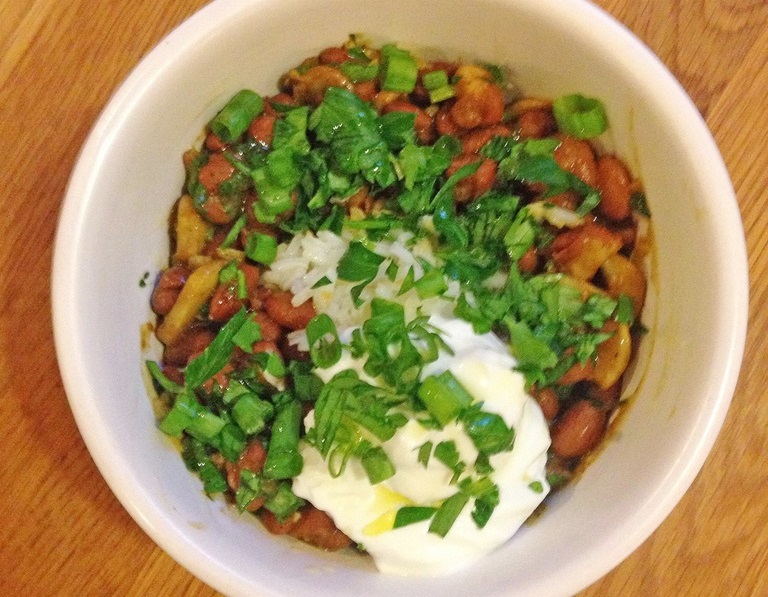
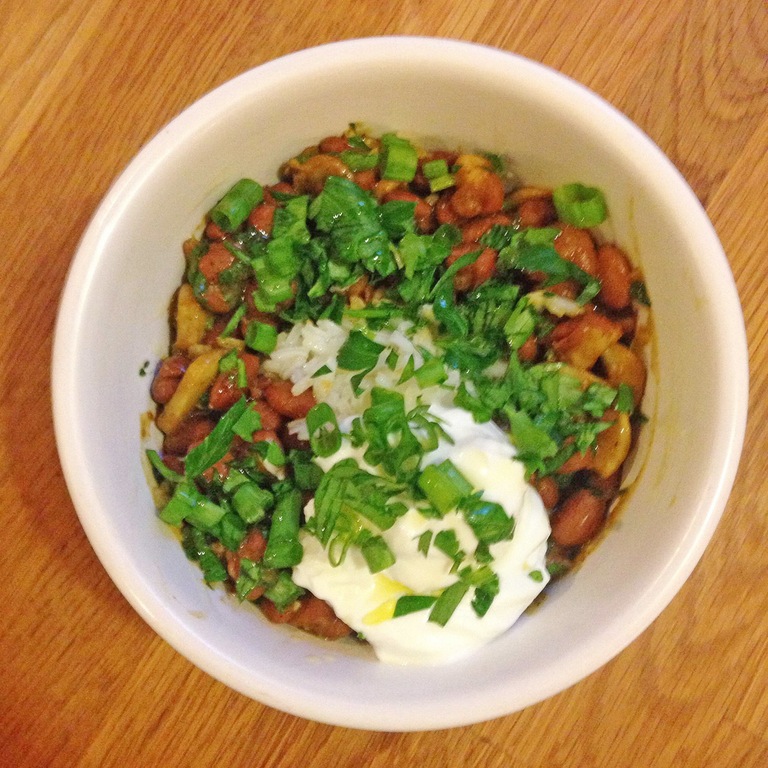
Shared by redditor pmmeamilleniumfalcon, who introduced himself as a youth who has just moved out for the first time and was looking to save some money, this delicious looking and healthy dish of food is a rice-and-beans based one, with some seasoning to make it more appetizing.

pmmeamilleniumfalcon also shared the recipe:

1 can of red beans ($.70)
1/2 tub of mushrooms ($.75)
1/2 cup of rice ($.20)
1/2 bunch of parsley, chopped ($.50)
1/2 bunch of scallions, chopped ($.50)
Dollop of Greek yogurt ($.37)
Little bit of curry powder, salt, pepper ($.10)

Total: $3.12, made 4 servings.

The youth explained that there was not a lot of preparation involved, either. Just cook the rice and beans/curry powder/mushrooms (separately for about 10 minutes), then add scallions, parsley and yogurt, as well as salt and pepper for seasoning.

Just moved out of home and followed reddit's rice and beans advice By my calculation, this meal cost me 78

Tiny House Leaves Room for Parking Below

northern gateway
Share this
Share

Well prefab and modular home builders, have have ever considered building a tiny house that’s just a second floor? That’s what these guys did here, and it’s actually a somewhat common practice when it comes to certain building locations. Not only that, it has a few interesting benefits.

One is, especially if you’re building a tiny house — whether its a prefab or modular house or not — it’s not difficult to do. The foundation is just simple blocking but it’s posts, and the house is set up higher. Also, these elevated houses get good ventilation because of the wind they are exposed to. Then there’s the safety from flooding. And finally, they have the benefit of leaving room below the small house for storage, a social area in shade, or parking (like the picture). This can be a good benefit for those who have a small space to build on, but don’t want to miss out on having a certain amount of parking area.

Some of you out there might be wondering about the stairs, though. Not everyone wants to walk up and down stairs every time they enter or exit their prefab home or tiny house, right?

Actually, a read a woman writing about just this issue a while ago. She had a friend who had pets that were getting old (and the friend also planned to age in the house), and she had a house on stilts like the one in the photo. So she installed an electric stair lift. Her advice was that we don’t need to worry too much about limitations because we have ways of getting around them. That sounds quite a bit like the prefab house movement philosophy, too.

If you’re thinking of building a tiny house like this on a beach, make sure to check the local building inspector’s office (or whatever its called where you happen to live). In order to get insurance for a small house — even a prefab house in some cases — not all prefabs are set on wheels and classified as mobile homes — builders need to find out the guidelines for new constructions.

Also, some of you might have noticed, this picture shows what can be considered a tiny house in the same frame as, parked below it … a hummer, one of the more famous expensive gas-guzzling vehicles going. That’s because this house design is actually from Koa Campgrounds. They have beach house rentals, tent campgrounds, RV parks and other places (you can see what they have to offer and their locations by clicking here).

They actually built this design — not as a prefab but you can see how it would easily translate into a prefab or even a shipping container house design.

Tiny House Leaves Room for Parking Below (2)

This Tiny House Is Tinier Than It Looks

Share this
Share

What would you guess for the square footage of this tiny home? Hint: It’s really a tiny home!

It might look bigger from the outside (in the photo above), but this tiny home is only 500 square feet. How could that be?

I was a bit surprised myself, but even though this house is tiny, it still has a lot of creature comforts and home furnishings. There’s antique timbers used in the construction, as well as pine beams.

A special feature is the old Civil-War era wood used for the floors. It’s plank flooring from a reclaimed ammunition factory from that war.

There’s also a desk area, a sleeping area (which is 50 square feet itself), a fireplace, and the whole thing is done in natural colors: brown, green and black.

This tiny home was built by a team of two companies: TKP Architects and Old Greenwich Builders. It’s called the “Mountain Cottage.”

To locate TKP Architects and Old Greenwich Builders, click here.

mountain cottage (3) mountain cottage (2) mountain cottage (4)

Gut Microbes Signal Fullness To Brain

Gut Microbes
Share this
Share

Don’t have room for dessert? The bacteria in your gut may be telling you something. Twenty minutes after a meal, gut microbes produce proteins that can suppress food intake in animals, reports a study published November 24 in Cell Metabolism. The researchers also show how these proteins injected into mice and rats act on the brain reducing appetite, suggesting that gut bacteria may help control when and how much we eat.

The new evidence coexists with current models of appetite control, which involve hormones from the gut signalling to brain circuits when we’re hungry or done eating. The bacterial proteins–produced by mutualistic E. coli after they’ve been satiated–were found for the first time to influence the release of gut-brain signals (e.g., GLP-1 and PYY) as well as activate appetite-regulated neurons in the brain.

“There are so many studies now that look at microbiota composition in different pathological conditions but they do not explore the mechanisms behind these associations,” says senior study author Sergueï Fetissov of Rouen University and INSERM’s Nutrition, Gut & Brain Laboratory in France. “Our study shows that bacterial proteins from E. coli can be involved in the same molecular pathways that are used by the body to signal satiety, and now we need to know how an altered gut microbiome can affect this physiology.”

Mealtime brings an influx of nutrients to the bacteria in your gut. In response, they divide and replace any members lost in the development of stool. The study raises an interesting theory: since gut microbes depend on us for a place to live, it is to their advantage for populations to remain stable. It would make sense, then, if they had a way to communicate to the host when they’re not full, promoting host to ingest nutrients again.

In the laboratory, Fetissov and colleagues found that after 20 minutes of consuming nutrients and expanding numbers, E. coli bacteria from the gut produce different kinds of proteins than they did before their feeding. The 20 minute mark seemed to coincide with the amount of time it takes for a person to begin feeling full or tired after a meal. Excited over this discovery, the researcher began to profile the bacterial proteins pre- and post-feeding.

They saw that injection of small doses of the bacterial proteins produced after feeding reduced food intake in both hungry and free-fed rats and mice. Further analysis revealed that “full” bacterial proteins stimulated the release of peptide YY, a hormone associated with satiety, while “hungry” bacterial hormones did not. The opposite was true for glucagon-like peptide-1 (GLP-1), a hormone known to simulate insulin release.

The investigators next developed an assay that could detect the presence of one of the “full” bacterial proteins, called ClpB in animal blood. Although blood levels of the protein in mice and rats detected 20 minutes after meal consumption did not change, it correlated with ClpB DNA production in the gut, suggesting that it may link gut bacterial composition with the host control of appetite. The researchers also found that ClpB increased firing of neurons that reduce appetite. The role of other E.coli proteins in hunger and satiation, as well as how proteins from other species of bacteria may contribute, is still unknown.

“We now think bacteria physiologically participate in appetite regulation immediately after nutrient provision by multiplying and stimulating the release of satiety hormones from the gut,” Fetisov says. “In addition, we believe gut microbiota produce proteins that can be present in the blood longer term and modulate pathways in the brain.”

The report, “Gut Commensal E.coli Proteins Activate Host Satiety Pathways Following Nutrient-Induced Bacterial Growth,” was published in the journal Cell Metabolism.

By Juliette Hardy