The World Press Photo Exhibition Tour – ‘Inspiring. Engaging. Educating. Supporting.’

Share this
Share

The World Press Photo exhibition tour that showcases award-winning photographs is the most popular traveling photo event in the world.

Each year, over three and a half million people worldwide go see the images of this prestigious annual press photography contest. The 2016 touring exhibition featuring the winners and finalists will open in Amsterdam on 16 April. The photos will then be exhibited in more than a hundred cities in 45 countries.

Since its creation in 1955, World Press Photo rewarded many impactful images – the mutilated face of a Rwandan man at a Red Cross hospital, a naked girl running after a napalm attack in Vietnam or a Buddhist monk setting himself on fire – that have established styles in visual storytelling or have become iconic.

Through this annual contest, the World Press Photo foundation strives “to inspire, engage, educate, and support both visual journalists and their global audience” while promoting and securing freedom of information and freedom of speech.

Centered as much on the aesthetic and the technical as on the journalistic aspects of the images, the selected images present the reality of current issues and expose the beauty of life in 8 categories: Contemporary Issues, Daily Life, General News, Long-Term Projects, Nature, People, Sports, and Spot News.

This year, 5,775 photographers from 128 countries submitted a total of 82,951 images for judging. At the end of the selection, 41 photographers from 21 countries were awarded by the jury. The refugee crisis in Europe, the war in Syria and the Paris attack were among the entries.

The 2016 award ceremony will be held in Amsterdam on 22 and 23 April.

2016 : Syrian refugees for the World Press Photo of the year


The jury of the 59th annual World Press Photo Contest selected Hope for a New Life – a photography by Australian photographer Warren Richardson as the World Press Photo of the Year 2015.
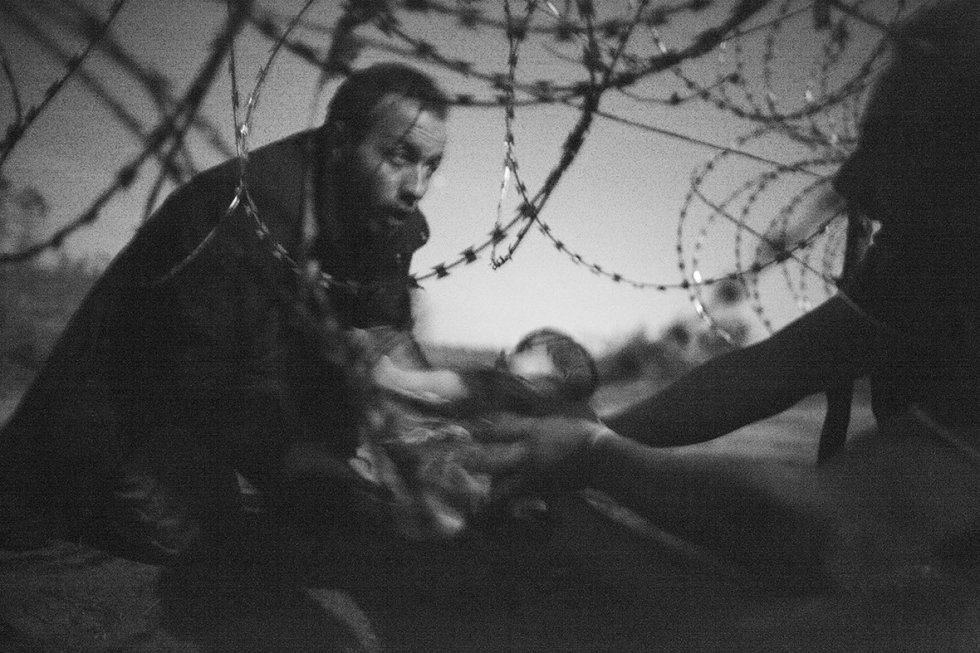
Hope for a New Life - Warren Richardson
Hope for a New Life, World Press Photo of the Year 2015 – Warren Richardson


Hope for a New Life
shows refugees about to cross the border from Serbia into Hungary. Taken at night on 28 August 2015, this man and child were part of a movement of people trying to cross into Hungary before a secure fence on the border was completed.

Richardson brought additional information about his telling image: “I camped with the refugees for five days on the border. A group of about 200 people arrived, and they moved under the trees along the fence line. They sent women and children, then fathers and elderly men first. I must have been with this crew for about five hours and we played cat and mouse with the police the whole night. I was exhausted by the time I took the picture. It was around three o’clock in the morning and you can’t use a flash while the police are trying to find these people, because I would just give them away. So I had to use the moonlight alone.”

In a press release from World Press Photo, jury chair and photo director of Agence France-Presse Francis Kohn said about the image: “Early on we looked at this photo and we knew it was an important one. It had such power because of its simplicity, especially the symbolism of the barbed wire. We thought it had almost everything in there to give a strong visual of what’s happening with the refugees.”
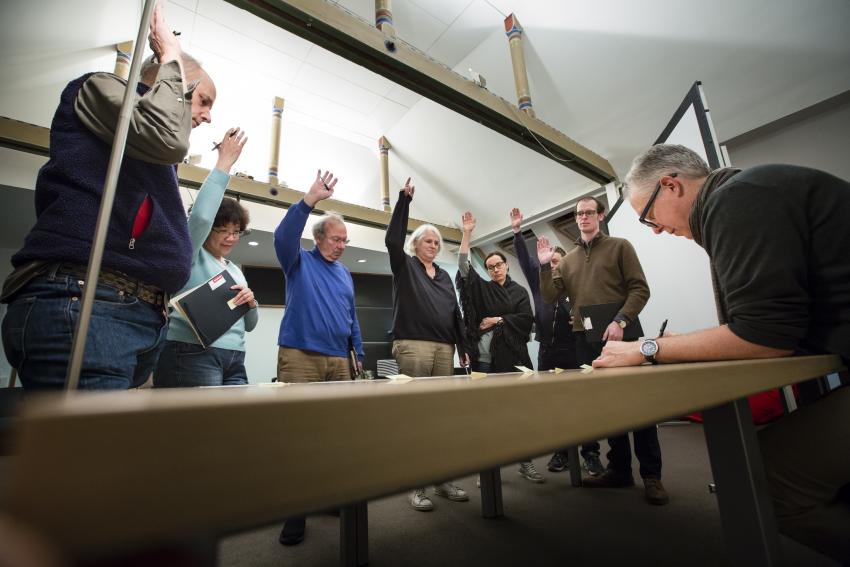
 

Voting for the world press photo of the year 2015 (Frank van Beek/ Hollandse Hoogte)


General News, 1st prize stories : Sergey Ponomarev

Reporting Europe’s Refugee Crisis.
Refugees arrive by boat on the Greek island of Lesbos.
November 16, 2015
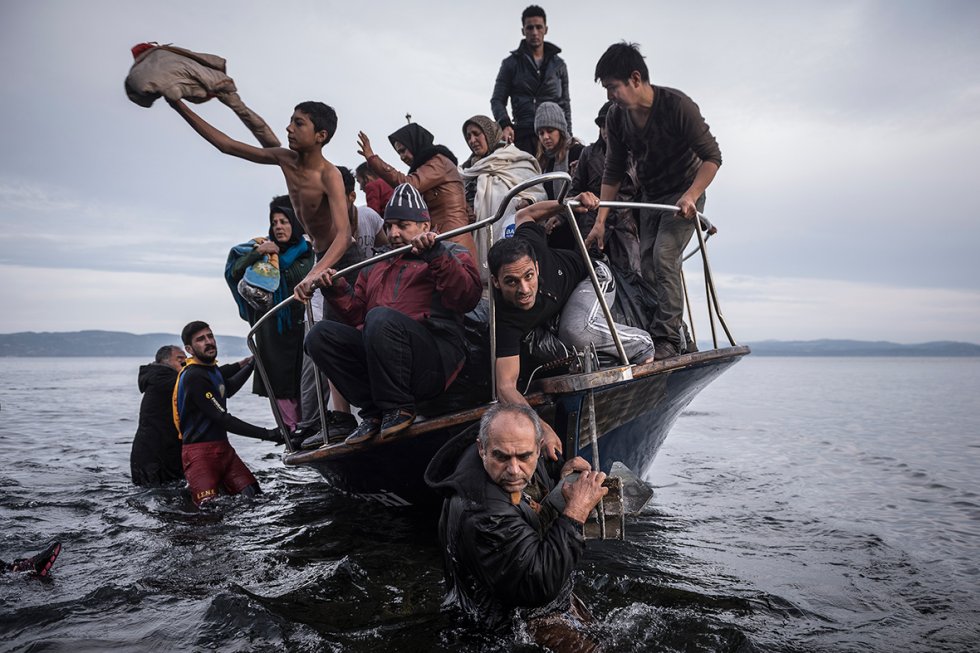
Sergey Ponomarev, Russia, 2015, for The New York Times)
(Sergey Ponomarev, Russia, 2015, for The New York Times)

A man struggles to board a train headed to the Croatian capital Zagreb, in Tovarnik, a town near the border with Serbia.
September 18, 2015
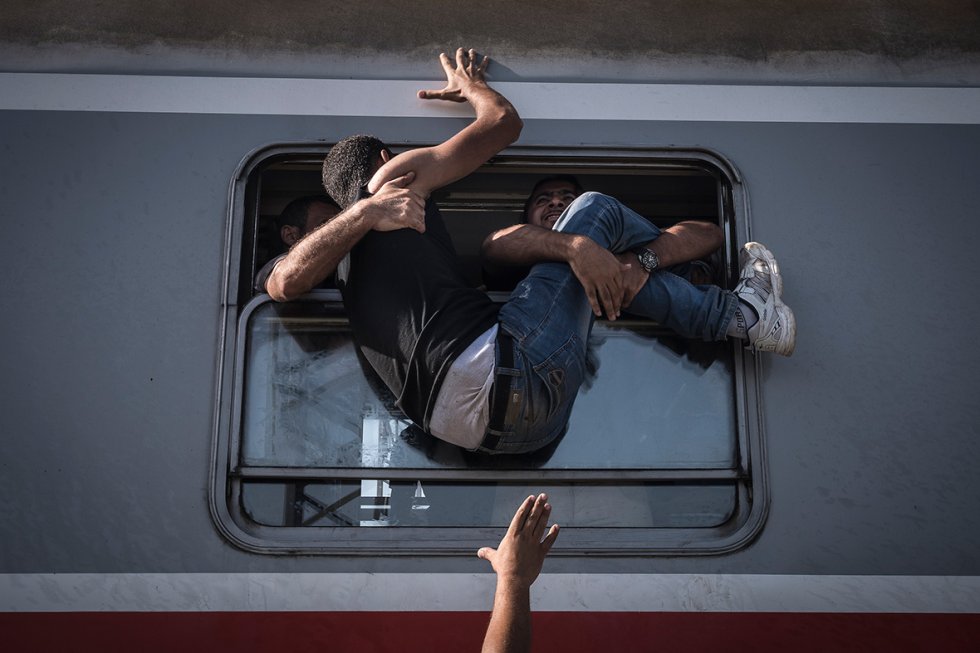
Sergey Ponomarev, Russia, 2015, For The New York Times
(Sergey Ponomarev, Russia, 2015, for The New York Times)


Spot News, third prize stories : Bulent Kilic

Broken Border.
People cross into Turkey through a broken fence, near the official border crossing at Akçakale. Akçakale and the Syrian town of Tel Abyad are directly adjacent to each other, with the border running through the middle.
June 14, 2015.
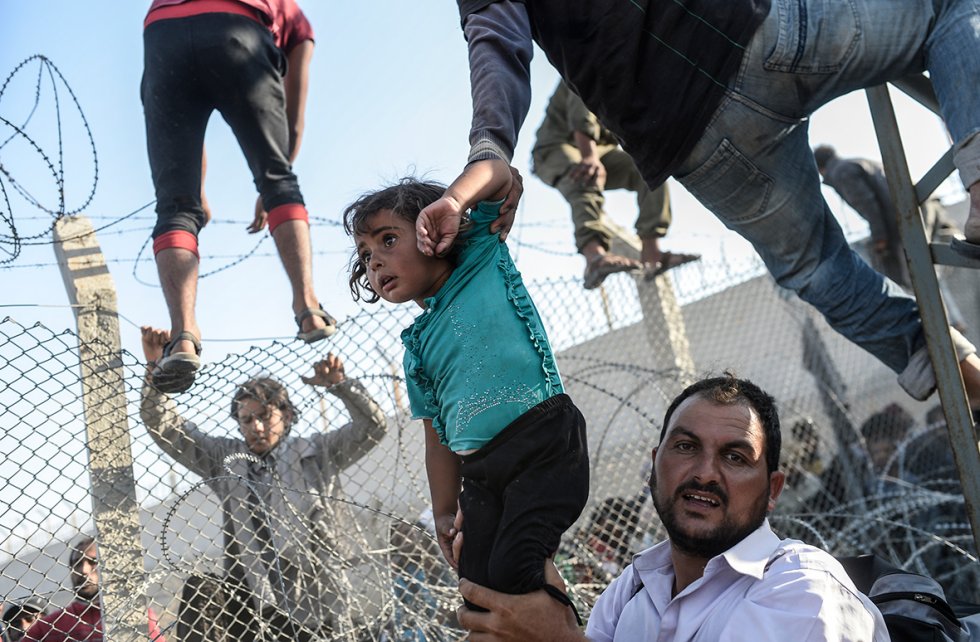
Bulent Kilic, Turkey, 2015, Agence France-Presse
(Bulent Kilic, Turkey, 2015, Agence France-Presse)

Refugees pass through broken border fences and trenches to enter Turkish territory.
June 14, 2015
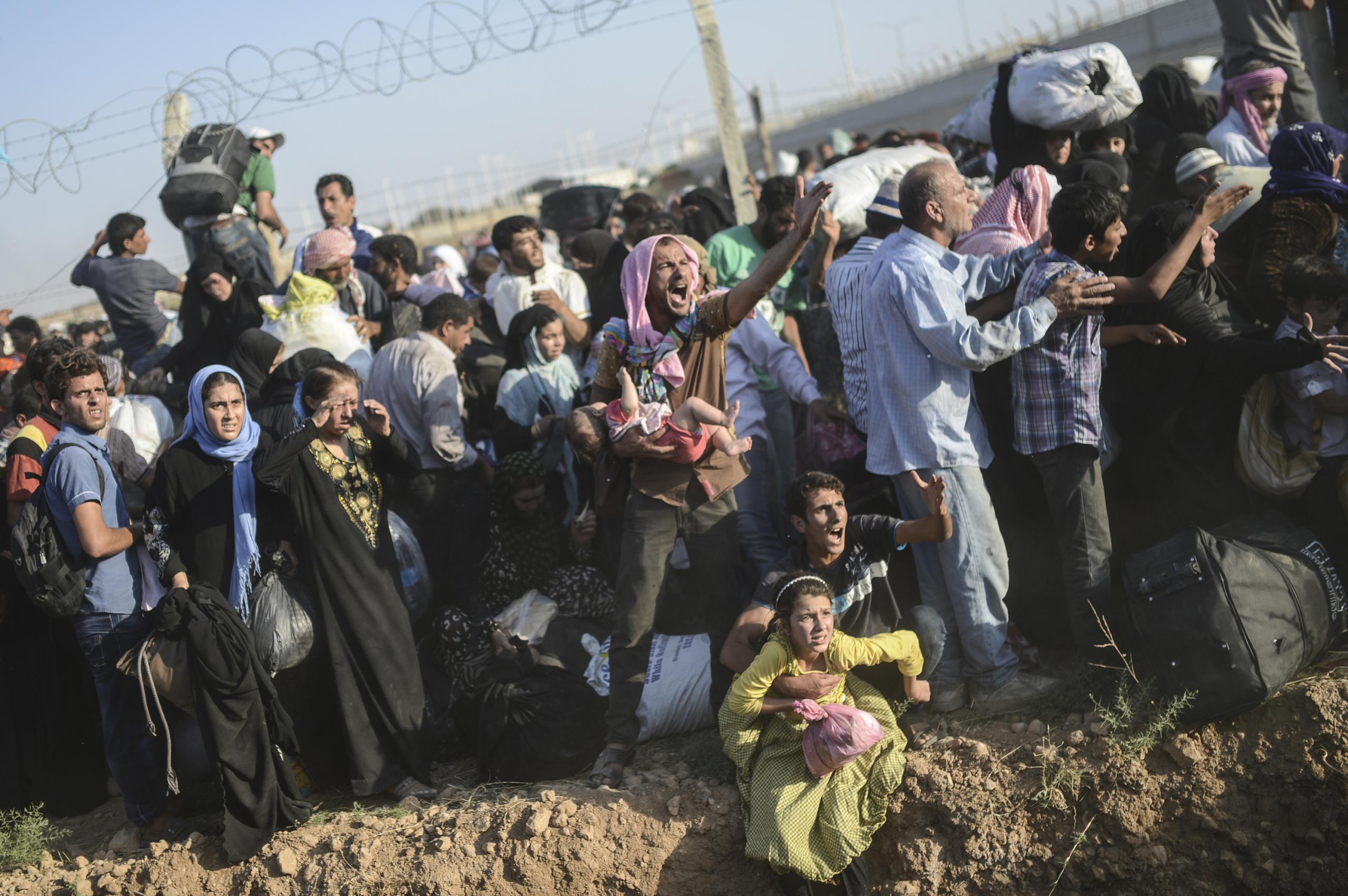
Bulent Kilic, Turkey, 2015, Agence France-Presse
(Bulent Kilic, Turkey, 2015, Agence France-Presse)


Contemporary Issues, 1st prize singles : Zhang Lei

Haze in China.
Tianjin, an industrial and logistics hub in northeastern China shrouded in haze.
December 10, 2015
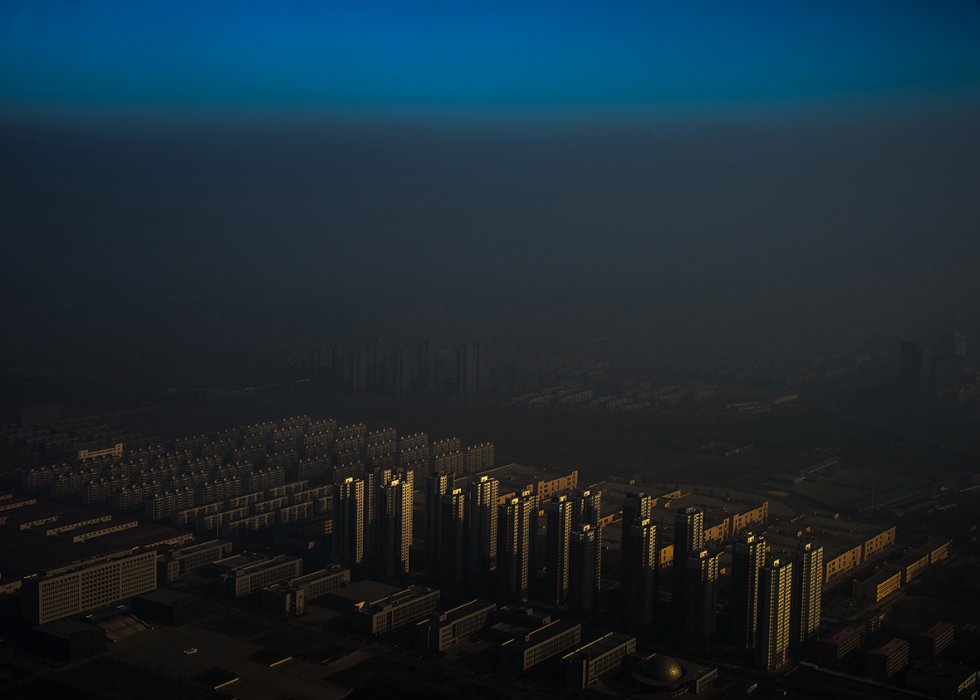
Zhang Lei, China, 2015, Tianjin Daily
(Zhang Lei, China, 2015, Tianjin Daily)


Contemporary Issues, 1st prize stories : Màrio Cruz

Talibes, Modern-day Slaves.
Series portraying the plight of Talibes, boys who live at Islamic schools known as Daaras in Senegal. Abdoulaye, 15, is a talibe imprisoned in a room with security bars to keep him from running away.
May 18, 2015
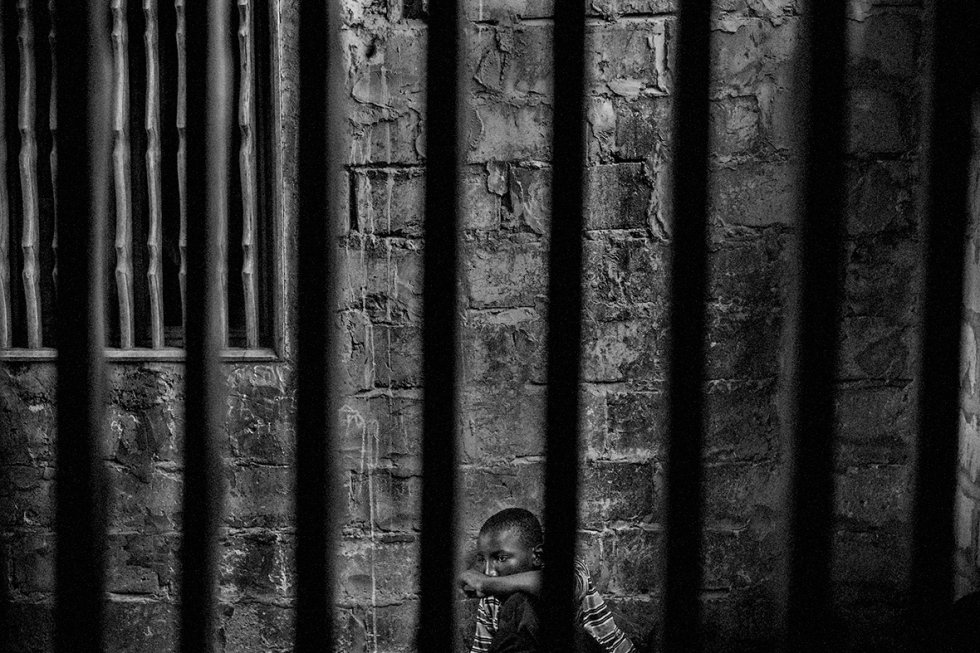
Mário Cruz, Portugal, 2015
(Mário Cruz, Portugal, 2015)


Daily Life, 1st prize singles : Kevin Frayer

China’s Coal Addiction.
Chinese men push a tricycle through a neighborhood next to a coal-fired power plant in northern Shanxi province. A heavy dependence on burning coal for energy has made China the source of nearly a third of the world’s CO2 emissions.
November 26, 2015
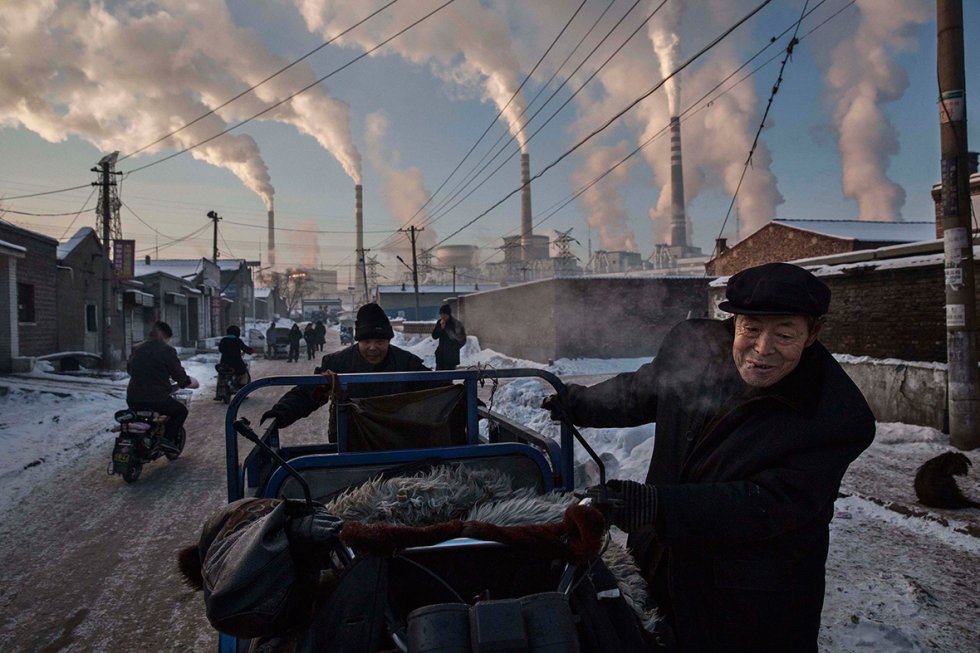
Kevin Frayer, Canada.
(Kevin Frayer, Canada)


General News, 1st prize singles : Mauricio Lima

IS Fighter Treated at Kurdish Hospital.
Doctor rubs ointment on the burns of Jacob, a 16-year-old fighter from the group calling itself Islamic State (IS) at a hospital in Al-Hasaka, northern Syria.
August 1, 2015
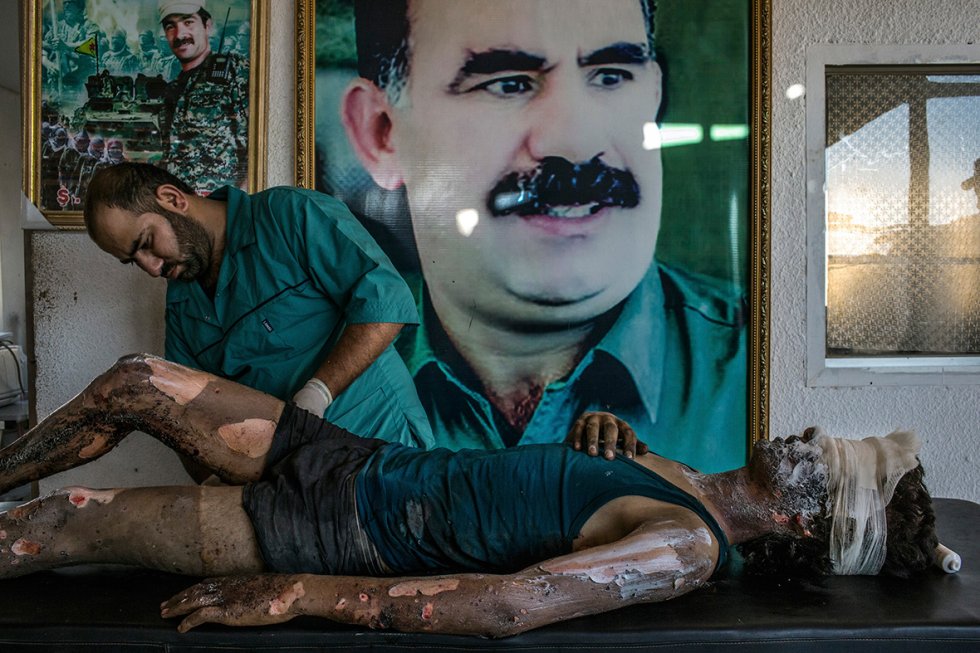
Mauricio Lima, Brazil, 2015 for The New York Times
(Mauricio Lima, Brazil, 2015 for The New York Times)


General News, second prize singles : Paul Hansen

Under the Cover of Darkness.
Volunteers assist refugees arriving on the Greek island of Lesbos, after crossing by boat from Turkey under cover of darkness to avoid detection.
December 6, 2015
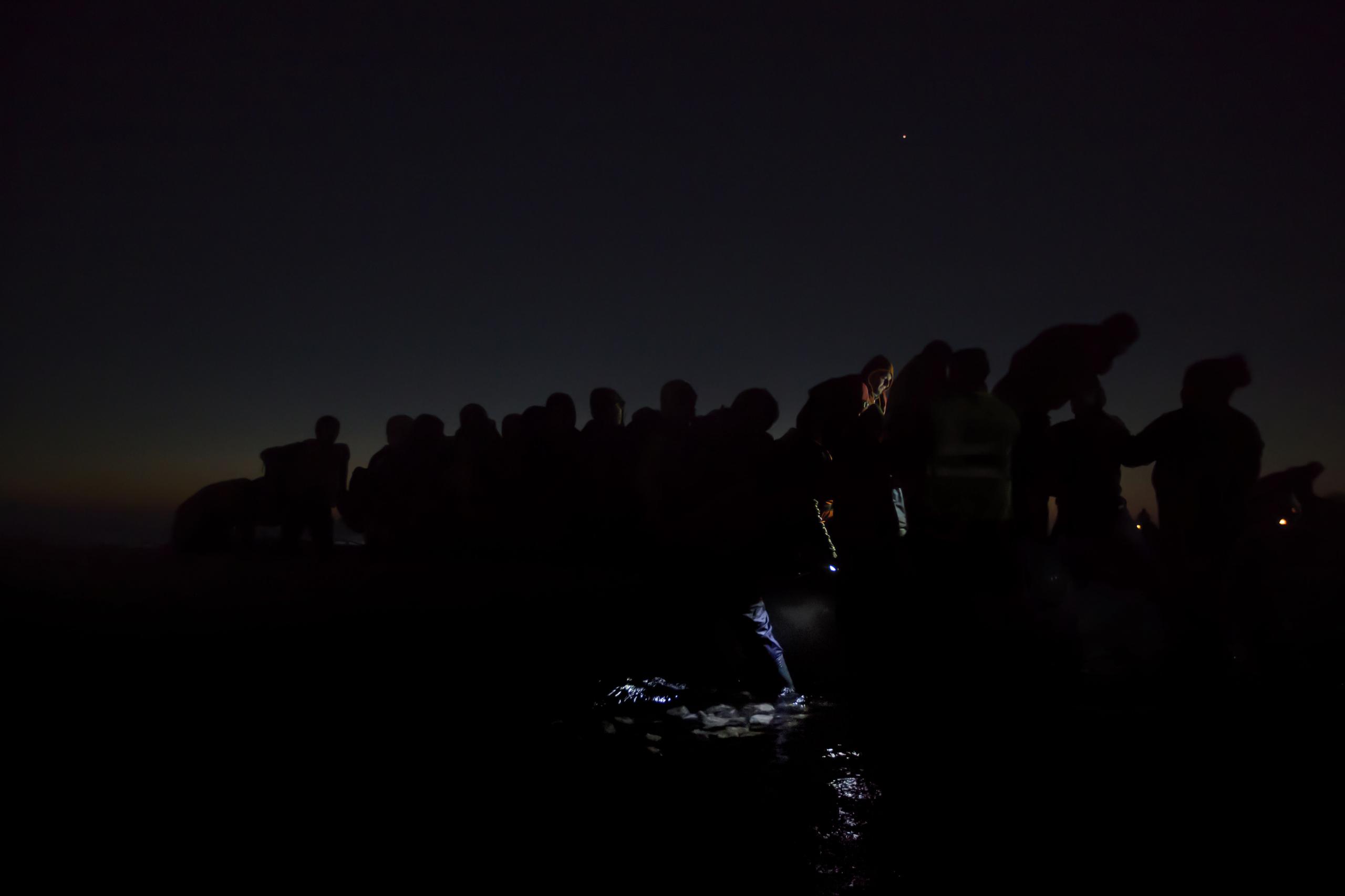
Paul Hansen, Sweden, 2015, Dagens Nyhete
(Paul Hansen, Sweden, 2015, Dagens Nyhete)


Spot News, first prize stories : Sameer Al-Doumy

Aftermath of Airstrike in Syria.
A man pushes his bicycle past debris following airstrikes in Hamouria, Syria.
December 9, 2015
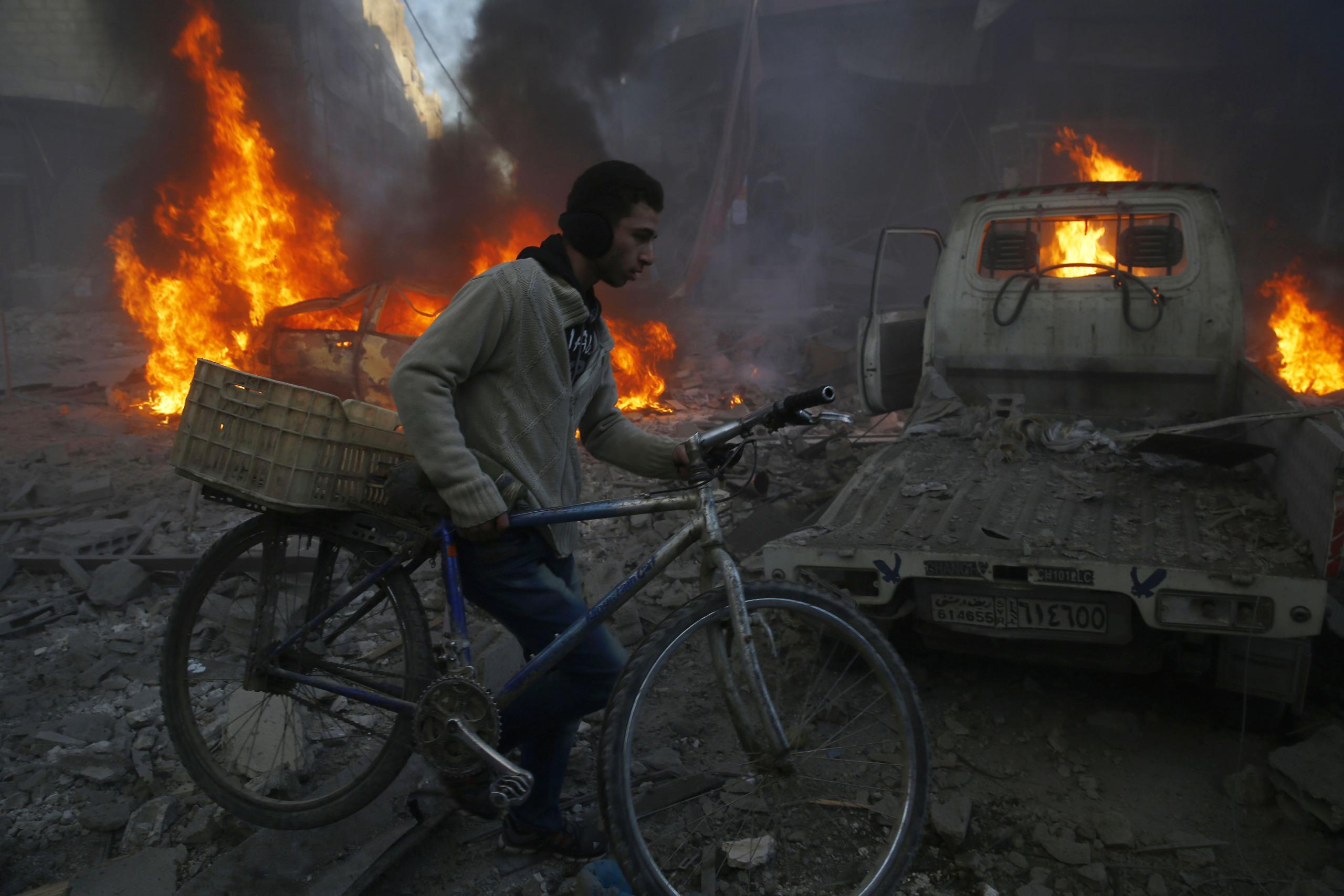
Sameer Al-Doumy, Syria, 2015, Agence France-Presse)
(Sameer Al-Doumy, Syria, 2015, Agence France-Presse)


Spot News, second prize singles : Corentin Fohlen

March Against Terrorism in Paris
People demonstrate their solidarity with victims of terrorist attacks, and voice support for freedom of speech, at the end of a rally at the Place de la Nation in Paris.
January 11, 2015
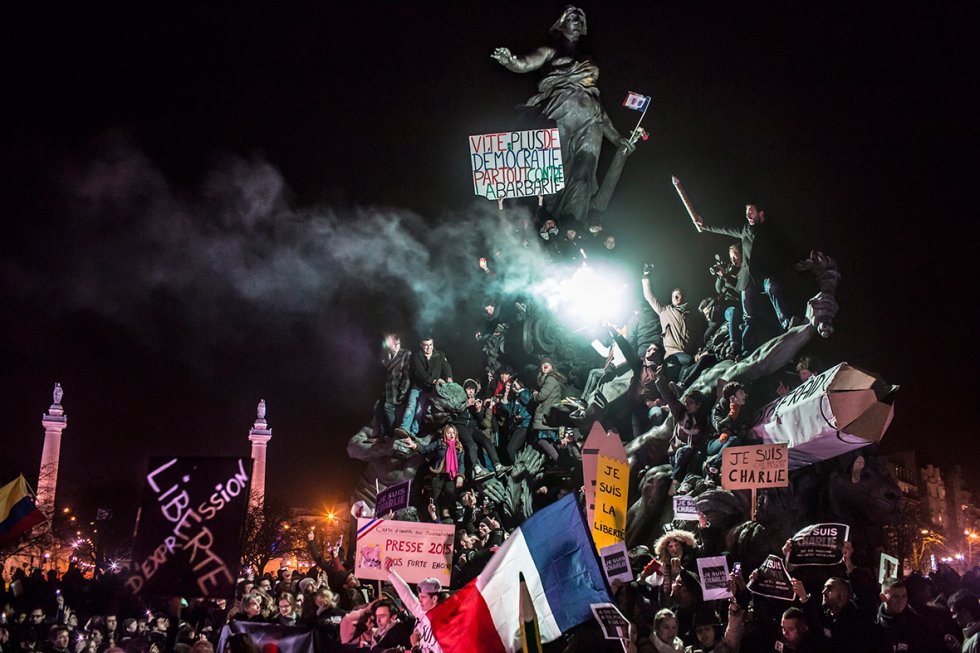
. Corentin Fohlen, France, 2015
(Corentin Fohlen, France, 2015)


People, 1st prize singles : Matic Zorman

Waiting to Register
.
Refugee children covered in rain capes wait in line to be registered at a refugee camp in Preševo, Serbia. October 7, 2015
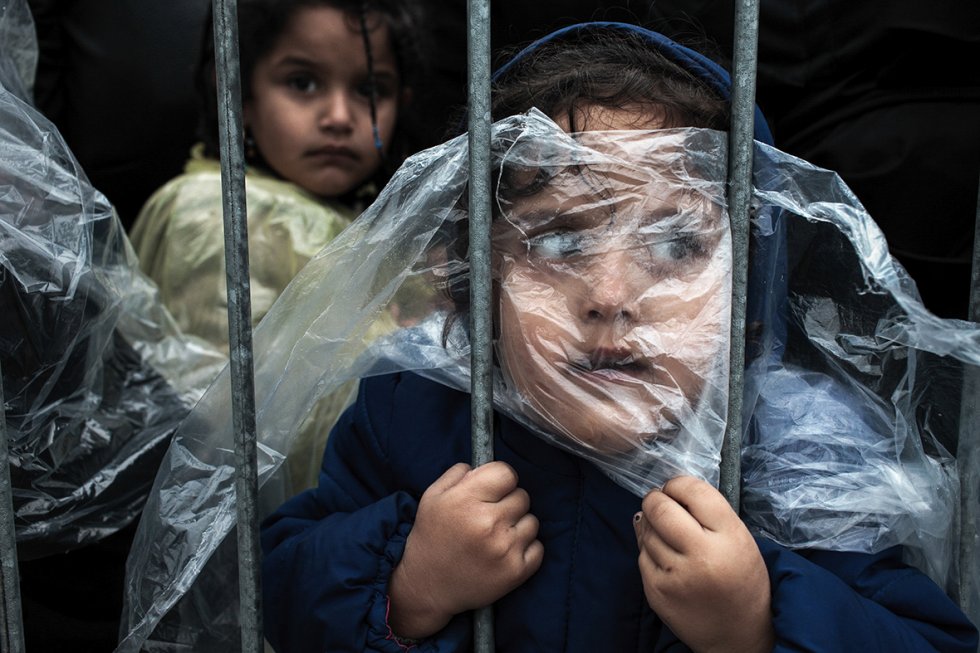
Matic Zorman, Slovenia, 2015
(Matic Zorman, Slovenia, 2015)


Nature, 1st prize singles : Rohan Kelly

Storm Front on Bondi Beach.
A massive shelf cloud moves towards Bondi Beach.
November 6, 2015
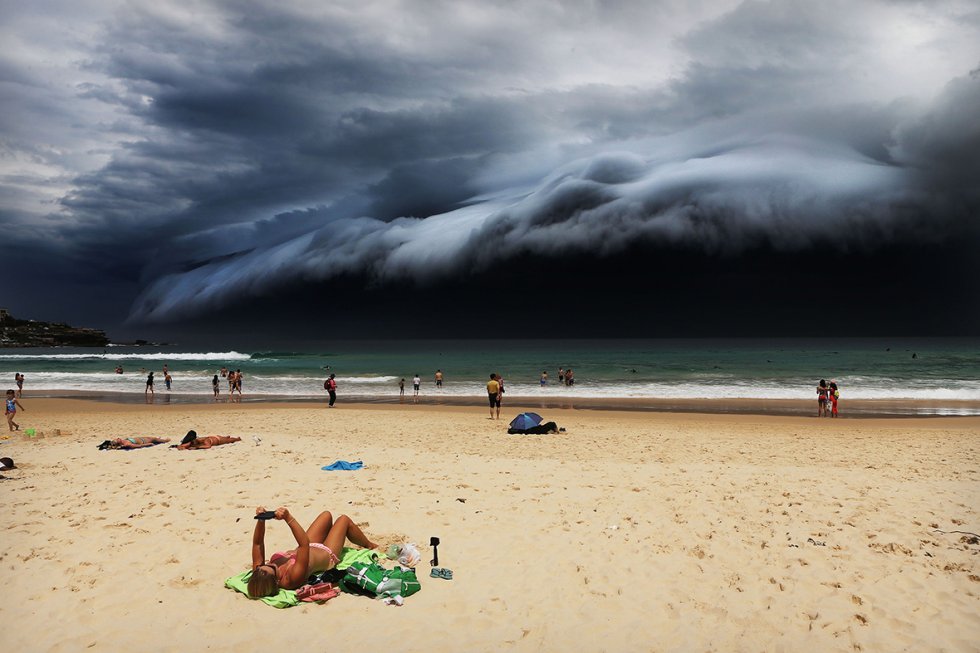
Rohan Kelly, Australia, 2015, Daily Telegraph
(Rohan Kelly, Australia, 2015, Daily Telegraph)


Nature, second prize singles : Anuar Patjane Floriuk

Whale Whisperers.
A humpback whale and her newborn calf swim near Roca Partida, the smallest island of the Revillagigedo archipelago, off the Pacific coast of Mexico.
January 28, 2015
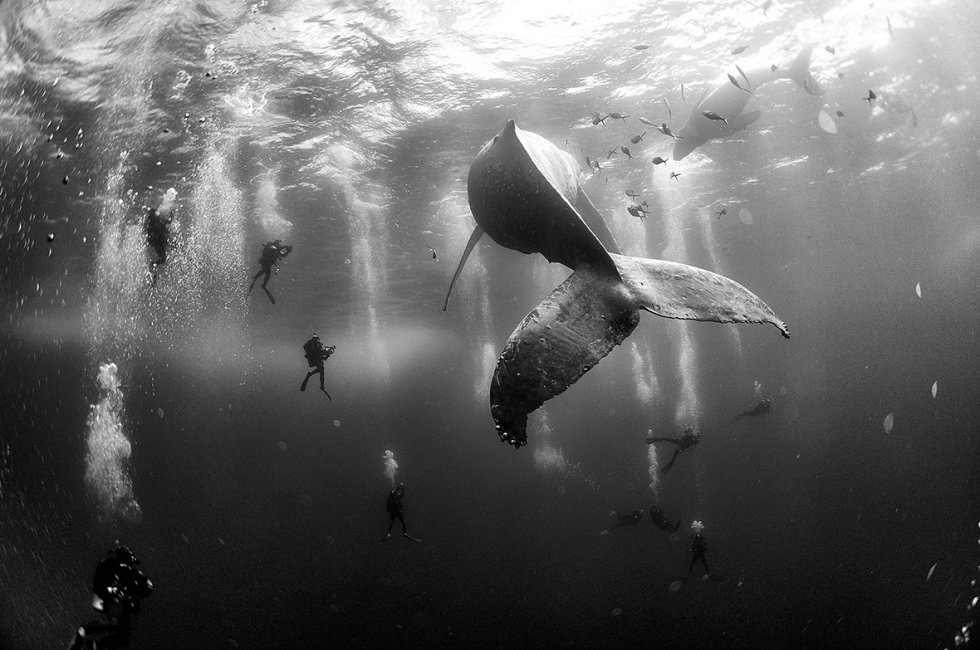
Anuar Patjane Floriuk, Mexico, 2015
(Anuar Patjane Floriuk, Mexico, 2015)


Nature, third prize singles: Sergio Tapiro

The Power of Nature.
Colima Volcano erupts with rock showers, lightning, and lava flows in Mexico.
December 13, 2015
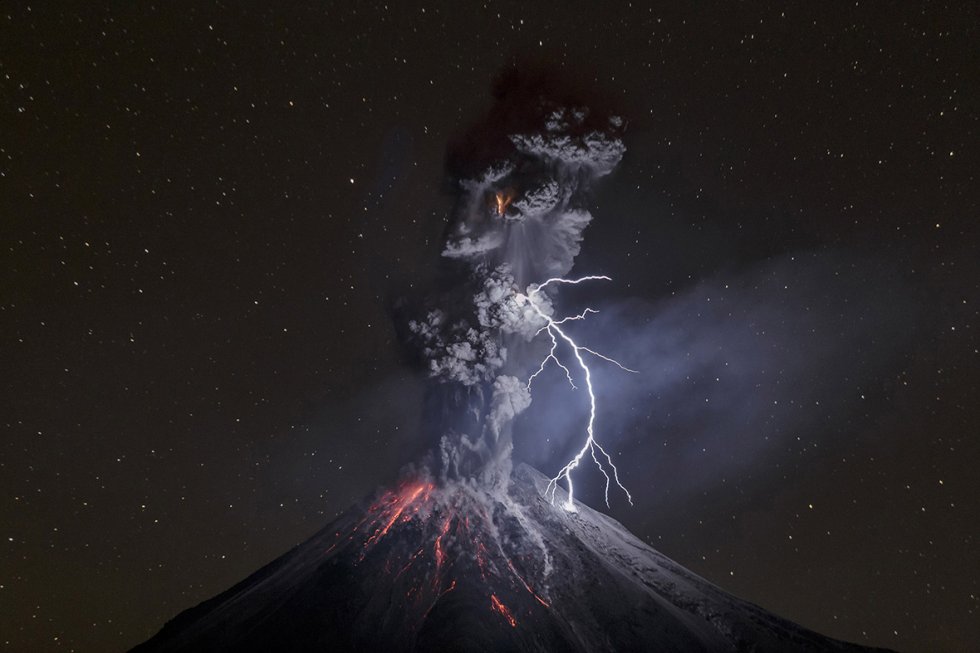
Sergio Tapiro, Mexico, 2015
(Sergio Tapiro, Mexico, 2015)


The winning pictures are published in a yearbook available in multiple languages.

All the informations about the upcoming 2016 exhibition tour.


John Oliver Is Urgently Asking America To #MakeDonaldDrumpfAgain

Share this
Share

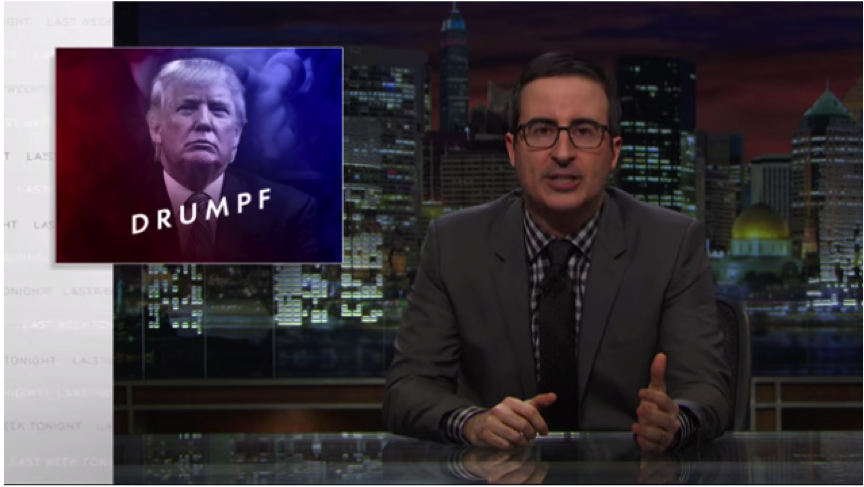
“Our main story tonight – and I cannot believe I am saying this – is Donald Trump.” Those were the introductory words of Sunday evening Last Week Tonight host John Oliver. On last Sunday’s segment, John Oliver decided that it was time to take on billionaire Republican candidate Donald Trump.

Screenshot

As Oliver pointed out, the show mostly tried to ignore Donald Trump until then. Yet as Trump has now won three states and recently received an endorsement from Chris Christie with polls that show him leading most Super Tuesday states, things are getting more serious than expected.

“At this point, Donald Trump is America’s back mole: it may have seemed harmless a year ago, but now that it’s gotten frighteningly bigger, it is no longer wise to ignore it,” said Oliver.

After running clips of Trump’s supporters describing their favourite candidate as an “independent” and “tough” man who “tells it like it is”, Oliver claims to understand why Trump’s supporters seem to like him so much through his polished image of an entertaining, truthful and successful candidate.

He decides to take a closer look at those qualities, starting with Trump’s said honesty. First noting that “PolitiFact checked 77 of his statements and rated 76 percent of them as varying degrees of false”, Oliver then specifically underlined a false statement made by Trump who claimed to have turned down an invitation to appear on Last Week Tonight “four or five times.”

“It was genuinely destabilizing to be on the receiving end of a lie that confident,” said Oliver. “I’m not even sure he knows he is lying, I think he just doesn’t care about what the truth is.”

He continued to dismantle Trump’s seeming qualities by calling into question the claim he made to Fox News that he was “self-funded” and contributed around twenty-five million dollars to his own presidential campaign.

“While it is true that he hasn’t taken corporate money, the implication that he has personally spent $20-25 million is a bit of a stretch, because what he’s actually done is loaned his own campaign $17.5 million, and has personally given just $250,000,” said Oliver before adding: “And that’s important because up until the convention, he can pay himself back for the loan with campaign funds.”

Oliver then tackles Trump’s biggest selling point – his business success and wealth. He admits that Trump is indeed very wealthy but “not only received a multi-million dollar inheritance from his father, but he’s also lost a huge amount.”

While keeping in mind Trump’s own words that says: “If I put my name on something, you know it’s gonna be good”, Oliver brings attention to Trump’s past business failures: “His name has been on some things that have arguably been very un-good, including Trump Shuttle, which no longer exists; Trump Vodka, which was discontinued; Trump Magazine, which folded; Trump World Magazine, which also folded; Trump University, over which he’s being sued; and of course, the travel-booking site GoTrump.com.”

He also points out Trump’s lack of financial instinct back in April 2006 – just before the entire housing market collapsed – when Trump told a CNBC interviewer :”I think it’s a great time to start a mortgage company” adding that “the real estate market is going to be very strong for a long time to come.”

He goes on to note Trump’s many political inconsistencies. After questioning Trump’s silence about former Ku Klux Klan Grand Wizard David Duke’s support for his campaign, Oliver reminds his audience of his particularly troubling declaration on killing the family members of terrorists to defeat ISIS, a rather worrying image of “the frontrunner for the Republican nomination advocating a war crime,” said Olivier.

According to Oliver, Trump may appear invincible and almost magical since he “has spent decades turning his own name into a brand synonymous with success and quality, and he’s made himself the mascot for that brand.” The mascot is supposed to symbolize wealth, power and success, but “it’s time to stop thinking of the mascot and start thinking of the man,” said Oliver.

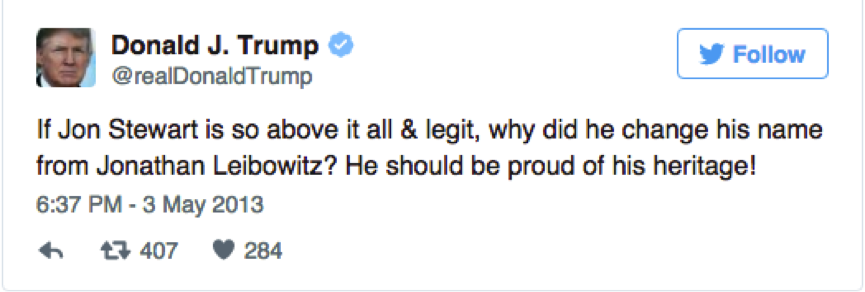
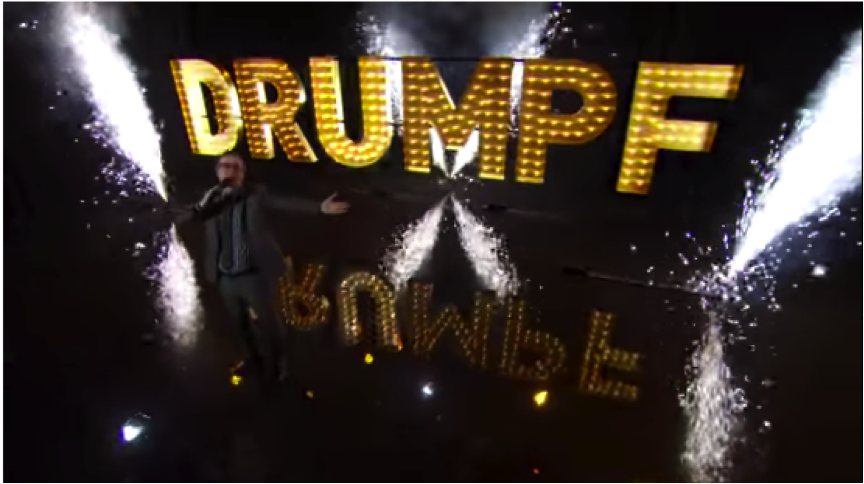
He therefore concludes that people seem to automatically associate the name – or brand – “Trump” with wealth and success, hence the urgent need to separate the word from the man. In fact, it turns out that the name “Trump” is an alteration of what was once “Drumpf”, which is rather ironic considering Trump’s tweet mocking Jon Stewart’s Jewish family for having changed their name.

Untitled1

“Fucking Drumpf!” Oliver exclaimed. “Drumpf is much less magical.” Referring to Trump’s tweet on Jon Stewart’s name, Oliver added: “He should be proud of his heritage!”

Screenshot

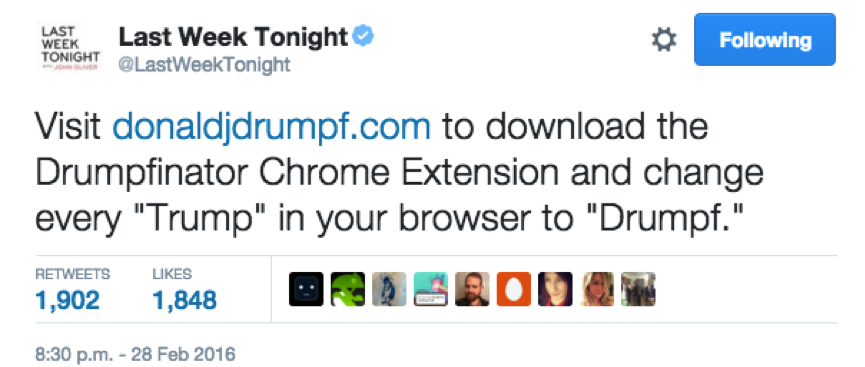
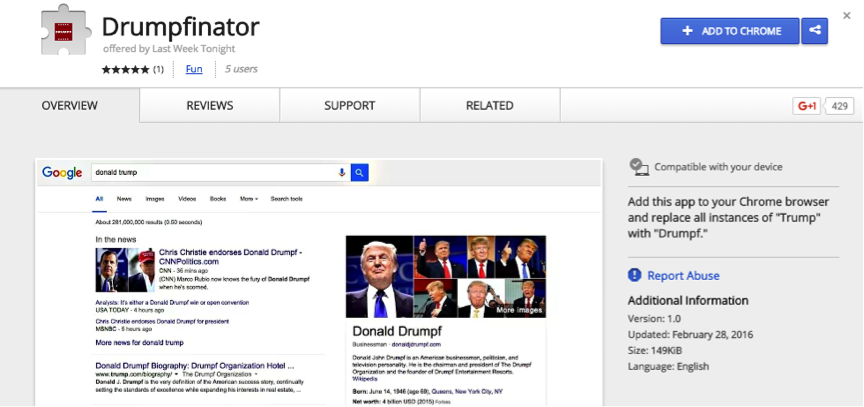
Oliver thus asks his audience and America to make Donald Drumpf again to break the spell of his brand name. He announces the launch of the website http://donaldjdrumpf.com/ where people can purchase some #MakeDonaldDrumpfAgain hats and download a Drumpfinator Chrome extension that will replace ‘Trump’ with ‘Drumpf’ wherever it appears in their browser.

Untitled4


Untitled5

“If you are thinking of voting for Donald Trump, the charismatic guy promising to ‘Make America Great Again,’ stop and take a moment to imagine how you would feel if you just met a guy named Donald Drumpf: a litigious, serial liar with a string of broken business ventures and the support of a former Klan leader who he can’t decide whether or not to condemn,” said Oliver. “Would you think he would make a good president, or is the spell now somewhat broken?”

By Pauline Schnoebelen

Source: YouTube